
How to Split Royalties With a Producer

How to split royalties with a producer starts with a distinction many artists miss: a song can generate income from its composition and from its sound recording, and those are not automatically the same pot. A producer may contribute to one, the other, or both. Before you record or release anything, write down what each person is contributing, which income the agreement covers, and how the money will be handled.
Separate songwriting income from master income
The composition is the underlying music and lyrics. If a producer helps write them, they may be a songwriter, and the writers should agree on their shares. Producing or mixing alone does not settle composition ownership, so a production credit is not a publishing agreement.
The master is the particular recorded performance that gets distributed. A producer agreement may give the producer a share of certain master income, sometimes described as points, or it may use a fee, another payment arrangement, or a combination. The exact basis matters: spell out which receipts count, what deductions apply, and when statements and payments are due. Composition shares and master royalties answer different questions.
Choose the deal before you record
First decide what work you are hiring or licensing. A ready-made beat, a custom instrumental, co-writing, production, recording and mixing can involve different contributions. A beat license can also set rules for using the instrumental, but it may not answer every question about songwriting credits or a separate producer payment. Read the actual terms instead of treating the word “producer” as a complete agreement.
A deal may use a fee, a share of specified revenue, or both. None is automatically fair for every track. The work, budget, writing contributions, recording ownership and release plan all matter. Do not copy another artist’s percentage without checking what it covers.
A beat should leave room for the song you want to make. Barbie has a warm, melodic direction that can support a vocal without deciding the lyrics or ownership for you. Listen to the Hip Hop instrumentals that fit your writing, and check each license before you build a release around it.

Put the producer royalty split in writing
Before work begins, make one document that identifies the track and the people involved, then state the deal in plain language. If the agreement contains a share of royalties, define the revenue source and calculation instead of writing only “producer gets royalties.” Keep the agreed terms, payment records and final credits together with the project files.
- Names and roles, including who wrote the music or lyrics and who produced, recorded or mixed.
- Any composition shares, and who will confirm and register them where needed.
- Any master income share, the receipts it applies to, deductions and payment schedule.
- Fees, deposits, revisions, deliverables and whether stems or project files are included.
- Credit wording, permitted uses, release plans and any limits in the beat license.
A split sheet records songwriting contributions and agreed composition shares, but it does not replace production or beat-license terms. If the producer also contributes to the master, or a fee is combined with royalties, write that arrangement down clearly too. Both sides should keep the same signed version.
Check the details before distribution
Before sending the song to a distributor, compare the paperwork with the credits and metadata you plan to submit. Confirm each writer’s name and share, the producer credit, the master arrangement, and that the beat can be used for the release you intend. If you are using a sample or another person’s material, that may raise a separate permission question. Do not treat a producer split as clearance for material neither party controls.
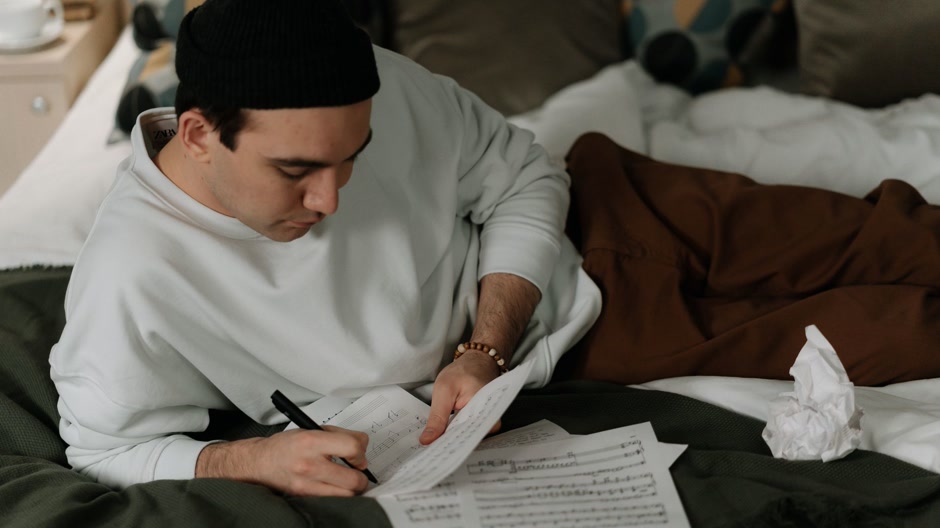
For a ready-made instrumental, compare the terms with your release plan before you buy or record. You can browse the beat catalogue, but the listing is not a replacement for reading the license attached to the beat. If a point is unclear, ask the producer to clarify it in writing before release. Clear terms now are easier to manage than a disagreement after the song earns money.
FAQ: splitting royalties with a producer
What is a producer royalty split?
It is an agreement about whether a producer receives a share of specified income from a song. The agreement should say whether it concerns the composition, the master recording, or both, and explain how the share is calculated and paid.
Do producers automatically get songwriting royalties?
Do not assume that a production credit automatically decides composition ownership. The songwriting shares should reflect the actual contributions and be agreed by the writers. Put the arrangement in a split sheet or other clear written record.
What is a fair royalty percentage for a producer?
There is no single percentage that is fair for every track. The answer depends on the producer’s contribution, the payment arrangement and which revenue is included. Define the basis first, then negotiate and record the terms before release.
Should I agree on producer royalties before releasing the song?
Yes. Agree on fees, any composition shares, master income, credits and usage rights before distribution. If you cannot explain the deal in plain language, get clarification before either side relies on it.


