
How Many Songs in an EP? Building a 5-Track EP With One Producer

Knowing how many songs in an EP is the first decision that shapes everything else: the budget, the recording calendar and how the project is sold. An EP is four to six tracks, and five is the number most artists land on, because it is the shortest length that still proves you can do this more than once. A single shows one idea. An EP shows a world.
Doing it with one producer instead of five changes the maths. You record in one room, with one set of drums and one set of files, and the record sounds like a record instead of a playlist of auditions. This is the version that costs less and holds together better.
How many songs are in an EP?
Five, in most cases. Streaming platforms do not police the label, so the number comes from what the format is for: too few and it reads as a single with padding, too many and it becomes an album nobody finishes.
- Three or four songs works when all of them are strong and you want to move fast. It is a hard sell if two of them are the same idea.
- Five songs is the sweet spot: opener, single, a change of tempo, a personal one and a closer. Around seventeen minutes of music.
- Six or seven songs only if the seventh earns its place. Past that, call it an album and treat the release differently.
The practical test is blunt: name the five tracks and say what each one does that the others do not. If two of them do the same job, you have four songs and a spare.
One producer, five beats: why it wins
Five beats from five producers usually means five drum sounds, five mix chains and five ideas of what a hook is. You end up mixing an EP that fights itself, and every lease comes with its own terms for crediting, streaming caps and stems.
One producer gives you a coherent palette. The same engineer who tracks the drums on track one can answer with a variation on track four, and when you ask for a trackout, the files line up. It also opens a conversation about a pack: five beats, one agreement, one price. That is a smaller negotiation than five separate purchases and it usually ends cheaper per beat.
Read the licensing terms before you commit to a pack, so you know what each licence allows for streams, videos and live shows.
What the five tracks should do
An EP needs a shape, not five songs that happen to be finished. Before you buy anything, write the role of each slot:
- Track one sets the world in the first ten seconds. Short intro or straight into the hook.
- Track two is the single. The one you would send to a stranger.
- Track three changes something: tempo, mood or the voice in the room.
- Track four is the one you care about most, the reason for the project.
- Track five closes and leaves a door open for the next release.
Write that list before you go shopping for instrumentals. Producers build beats to a brief, and a brief with five roles in it gets a better pack than a message that says you want something dark.
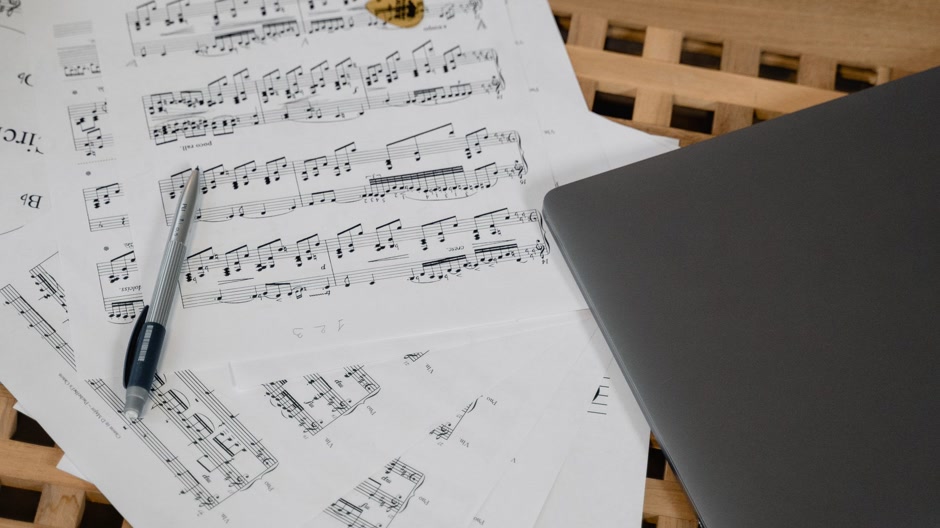
Ordering the tracklist
The first track is a decision about attention, and most first EPs waste it on a skippable intro. Put your second best song there. A stranger gives you fifteen seconds, and the opener is where that judgement happens.
Do not put the two most similar tracks next to each other. Put the tempo change in the middle of side one so a listener who has already decided they like you keeps going. Save the quietest or strangest one for fourth position, where the drop in energy reads as intention instead of a mistake.
Then listen once without skipping, standing up. If you reach for the phone at the same point twice, that is where the order is wrong, not where the song is weak.
Budgeting five beats
Two routes. Leases on five beats keep the upfront cost low but come with stream caps and a credit line, and you will need one for each track. An exclusive on one beat costs more and gives you the file for good, which only makes sense if the track is going to be pushed for years.
For a first EP, five leases from the same producer is the sane spend. Ask for a pack price in one message, name the five beats and the total you can pay, and ask whether the trackouts are included. If the producer only sells exclusives, ask what the price is for the set rather than for one beat, since the answer is often a bundle that nobody advertised.
Whatever the deal, get it in writing: which tracks, which licence, what the credit must say, and whether the beats can be used in videos. A two-paragraph email is enough. The splits on the songs should be agreed the same week, not after the release.
Recording and releasing in order
Record all five vocals before mixing any of them. Your voice settles over three sessions, and a record where track one was cut a month before track five sounds like two different artists. Same room, same engineer, same settings.
Mix the single first so you learn what the record sounds like, then apply that chain to the rest. Order the release after the artwork, the distributor and the release date are fixed, and keep the cover simple: five seconds of legibility on a phone beats a busy sleeve. The same discipline applies to the paperwork: one licence file per track and one folder with the proof of purchase, kept where you can find it two years later.
A beat like Mojito is the kind of instrumental that makes a five-track EP feel like one night: dusty vinyl texture, rim-heavy drums and two 808s that leave a rapper a wide lane in the middle. It sits well as track three or four, where the mood shifts and the record stops sounding like five attempts at the same song.

FAQ
How many songs should a first EP have?
Five. It shows range without asking a new listener for a half hour, and it gives you enough material to pitch playlists and press without padding.
Is five songs an EP or an album?
An EP. Albums run from eight or nine songs upward, and the industry treats anything under a half hour as an EP in practice, whatever the paperwork says.
How long should an EP be?
Fifteen to twenty minutes. Five tracks of three to four minutes each lands inside that window, and a shorter EP is fine as long as nothing on it feels like filler.
Do I need a separate licence for every beat?
Yes, unless the producer sells a pack under one agreement. Each track needs its own licence, so confirm the terms cover five songs and ask for the files named clearly.
Can I release an EP made with leased beats?
Yes, within the limits of the lease. Watch the stream cap and the credit line, and keep proof of purchase: distributors and platforms may ask for it if a claim lands.
If you already have the shape in your head and need the instrumentals, start from the dark trap beats or open the full catalogue and shortlist five that could live in the same room.


