
What Is an 808? The Bass Behind Trap Beats
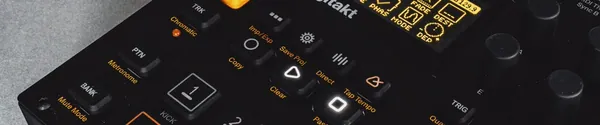
Ask ten producers what an 808 is and you get two answers, both correct. An 808 is a drum machine built in 1980, and it is also the name of the sub bass under almost every trap record released since 2010. The first answer explains the second, because that machine's kick drum had a decay long enough to hold a note, and eventually somebody noticed it could be tuned.
The drum machine that gave the sound its name
The Roland TR-808 Rhythm Composer arrived in 1980 at a list price of $1,195, sold as the cheaper alternative to the Linn LM-1. The LM-1 played samples of real drums. The 808 did not: it built every voice from analog synthesis, which is why its kick, snare and cowbell sound like nothing in a real kit. The TR stands for transistor rhythm.
Nobody wanted that at the time. The 808 was a commercial failure, fewer than 12,000 units sold, and Roland ended production in 1983 when the transistors it depended on could no longer be restocked. The machine that failed in the shops had already been picked up by hip hop. Run-DMC, LL Cool J and Public Enemy built records on it, and Hank Shocklee of the Bomb Squad put it plainly: it is not hip hop without that sound.
How a kick drum turned into a bassline
The 808 bass drum is a sine oscillator running through a low pass filter, with a decay control that lets the hit ring far longer than a real kick ever would. Rick Rubin is credited with popularising the trick that changed everything: stretch the decay and retune the drum to different pitches, and the kick becomes a bassline.
East Coast producers moved on in the 1990s. The South did not. Miami bass, Memphis and later Atlanta kept it in the picture, and by the time trap reached the charts the 808 had stopped meaning hardware.
What an 808 means in a trap beat today
In a modern session an 808 is a single sustained sub bass note, usually a clean sine or a slightly saturated one, tuned to the root of the harmony. It holds the low end a kick alone cannot sustain, and it moves in steps that follow the chords instead of a continuous melodic line.
The three parts of an 808 that works
- Pitch. If the beat sits in F minor, the 808 starts on F, and the notes it visits are the roots of the progression, not random drops.
- Length. The decay decides whether the note sustains under the bar or stops dead. Short and punchy reads as a drum, long and sustained reads as a bass.
- Harmonics. A pure sine is invisible on a phone speaker. Saturation adds the upper harmonics that let the note survive small drivers.
How to place an 808 under a beat
Writing the part is simpler than mixing it, and both decide whether the low end lands:
- Change note when the harmony changes, not on every bar.
- Leave space between hits. The gap is what makes the next note hit.
- Connect two notes with a glide instead of retriggering them. That slide is the gesture people recognise as trap.
- Clear the kick where the 808 sits, either by sidechaining the kick to the bass or by shortening one of the two. Two low ends in the same register is the most common reason a mix sounds soft.
- Check the 808 on a small speaker. If it only exists in headphones, it will disappear on a phone.
Why the same 808 sounds wrong in a different beat
An 808 is not a fixed sound you can drop into any session. It is tuned, so it is either in the key or it is out, and an out of tune sub bass cannot be fixed with mixing. It is also long, so it fights anything else in the same octave. Producers who work fast keep a folder of 808s sorted by key and tune the sample to the root before writing a single note.
Frequently asked questions
Is an 808 a kick or a bass?
Both, depending on the era. On the original TR-808 it is the bass drum voice. In a trap record today the 808 is the bass part, and the kick is a shorter drum sitting on top of it.
Do I need a real TR-808 to make 808s?
No. Almost every 808 on a modern record is a sample or a synth patch. What matters is the note shape: a sine with a long decay, tuned to the key, saturated enough to be heard on small speakers.
Why does my 808 sound muddy?
Usually because it is too long for the space it has, or because it plays notes outside the key. Shorten the tail and check that every note belongs to the progression.
Should the 808 follow the melody or the chords?
The chords. It is the bass, so it lands on the roots of the progression and lets the melody sit above it. When it copies the melody it collides with the lead.
Hearing it in a real beat
Reading about low end only goes so far. The quickest way to understand a good 808 is to play one under a full arrangement and hear where it stops and where it glides. This 808 Mafia type beat was built around that idea, with the sub carrying the drop and the kick cleared out of its way. The trap instrumentals section shows how the same low end behaves across different tempos and moods, and every beat here is available to lease and write over.


