
Music Distribution: What Your Beat Licence Has to Allow

Music distribution is the step between a finished song and a listener pressing play on Spotify, and it is where most releases break for reasons that have nothing to do with the music. A distributor delivers your files to the stores, registers the codes that identify the release, collects what the platforms pay and passes it on. What it cannot do is make a beat licence allow something the producer never sold you.
If the song was built over a catalogue beat, the release starts with a document you either have or do not.
What a distributor actually does
Delivery is the visible half. Underneath sits metadata: the artist name as it appears in every store, the release date, artwork at the size each platform demands, track order and territory list. Then the identifiers, a UPC for the release and an ISRC per recording, which is how a stream gets matched to a payment.
The invisible half is accounting. Streaming pays fractions of a cent per play, from dozens of platforms, in several currencies, and the distributor's real job is to add that up and split it. That splits field matters more than the description you write: if the producer is not listed, his share of the recording goes unclaimed or lands on you, and fixing it later means a manual adjustment. The master stays yours either way.
What your beat licence has to allow
Distribution is a commercial use, so the licence decides whether you can do it at all. The types are not interchangeable.
A free download carries no release rights. It exists for writing and demos. Spotify, Apple Music, a monetized YouTube channel or Content ID are all outside what that file was given to you for.
A lease is commercial but capped. On our terms an MP3 lease covers one release up to 2,500 sales units and a WAV lease up to 5,000, royalty free, and past that cap the song comes down until the licence is upgraded. An unlimited lease removes the cap but runs for three years. An exclusive buyout is the only one with no cap and no expiry.
Find that line in your own licence and read the numbers. A soulful track like this neo soul and R&B instrumental is the kind worth clearing properly, because it can sit in playlists for years and the count creeps past a cap without anyone noticing.
Choosing a distributor without overpaying
Two models, both fine. One charges a yearly fee and keeps nothing of your royalties; the other is free and takes a percentage. Below a few thousand streams a year the percentage costs you almost nothing, above it the fee wins by a wide margin.
Price is the easy part. Does it deliver to the stores you need, handle splits, deal with Content ID, and what happens to your releases if you leave? Some platforms pull your songs down when the subscription lapses. Ask before you sign up, not after.
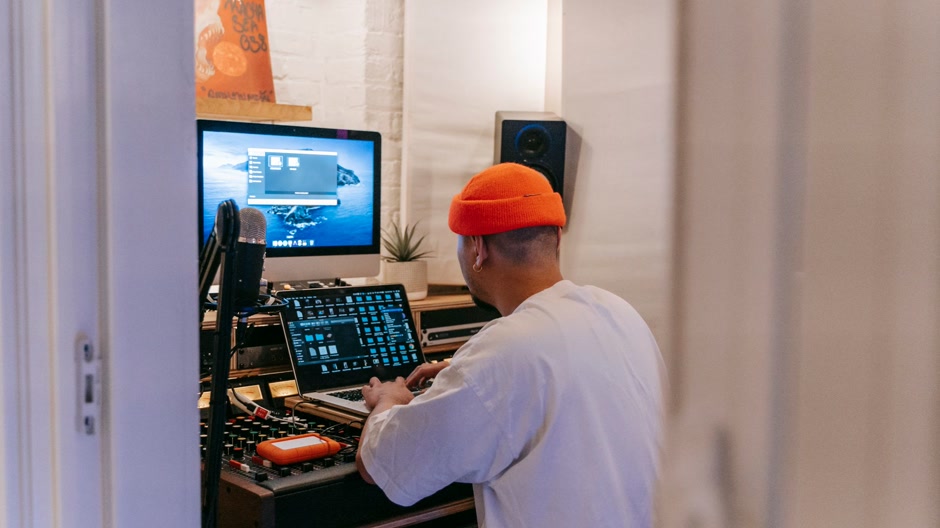
Before you upload: the checklist
- Licence on file, with the rights holder's name spelled as it appears on the document.
- Split agreed in writing, as a percentage of the recording, which is what the distributor divides.
- Final mix at the rate the distributor accepts, usually 44.1 kHz WAV.
- Artwork at 3000 by 3000, with no other platform's logo on it.
- Producer credit in the metadata and in the video description where the licence asks for it.
- Release date two to four weeks out, enough for playlist editors to see it.
Credits, Content ID and the claim that scares everybody
Every licence on this site requires the producer credit, in the form "Produced by Surce", on the release and anywhere the song is presented. It is a condition of the licence, not a courtesy.
Content ID is where people panic. Producers register their compositions with a service that scans YouTube and claims any video containing the audio, licensed or not. A claim on a video you have a licence for does not mean the licence failed. It means the scan found the beat before it found your paperwork. Send the link and proof of purchase to info@surcebeats.com and it gets whitelisted, usually within a day. Other producers work the same way.
And never register a song over a leased beat with your own service: the composition is not yours, and the second registration is the one that loses the revenue.
FAQ
Can I release a song made over a leased beat?
Yes, if the lease covers distribution and streaming and you stay inside its cap and its term. A basic lease is enough for a first single; a song that earns past the cap needs the upgrade, and the stores will not warn you.
Do I need my own ISRC?
No. The distributor generates one per recording and it belongs to the release. You only bring your own when you move a release between distributors and want the streams to keep counting on the same code.
Does my distributor collect the producer's share?
It collects the recording revenue and divides it by the percentages you entered. Publishing is collected separately by the societies, and a leased beat does not transfer any of that to you.
Can I upload the instrumental on its own?
Not without permission. A lease buys the right to sell a song over the beat, never the beat as a standalone product.
If you are still choosing the one to build around, the catalogue is here, and the R&B and neo soul pages are where to start for a slow release. The full licence text, caps included, is in the terms and conditions.


