
Afrobeats Type Beats: How the Drums and Groove Work
Searching for an afrobeats type beat is a different request from looking for trap. Nobody typing that phrase wants a distorted 808 sliding under a dark melody. They want the pocket: shakers moving in eighths, a light kick, one guitar or kalimba figure that answers the voice, and enough air above it for a chorus to open. Take the percussion out and the beat stops being afrobeats even if the chords are right.
That is why so many afro-leaning instrumentals sold online feel flat. The producer copies the tempo and the chord movement, skips the layer of hand percussion, and ends up with a pop beat and a sunny pluck on top.
What the word actually covers
Afrobeats is an umbrella, not a single style. It describes the pop coming out of Nigeria, Ghana and their diaspora since the 2000s, built from highlife, juju, hiplife, azonto and Naija beats melted into one modern sound. Wizkid, Burna Boy, Tems, Rema, Asake and Ayra Starr sit under that roof while sounding nothing alike.
The name is often confused with Afrobeat, the genre Fela Kuti built in the seventies around long horn sections and political funk. If a buyer asks for an afrobeat instrumental today, nine times out of ten they mean the modern one.
The percussion carries the groove
In most Western pop the drums are one instrument playing one pattern. In afrobeats the kit is a small band, and each member holds a part of the same idea: a shaker runs steady, congas answer it in the gaps, a rim click marks the turn of the bar, a bell locks the whole thing to the vocal.
The shaker is the metronome of the genre. Program it in straight eighths with a slight swing and it holds a track together even when the kick is simple. Give a small accent to the second eighth of each pair and it starts to breathe. Keep it off a grid that kills the push, and do not stack three shakers fighting for the same band.
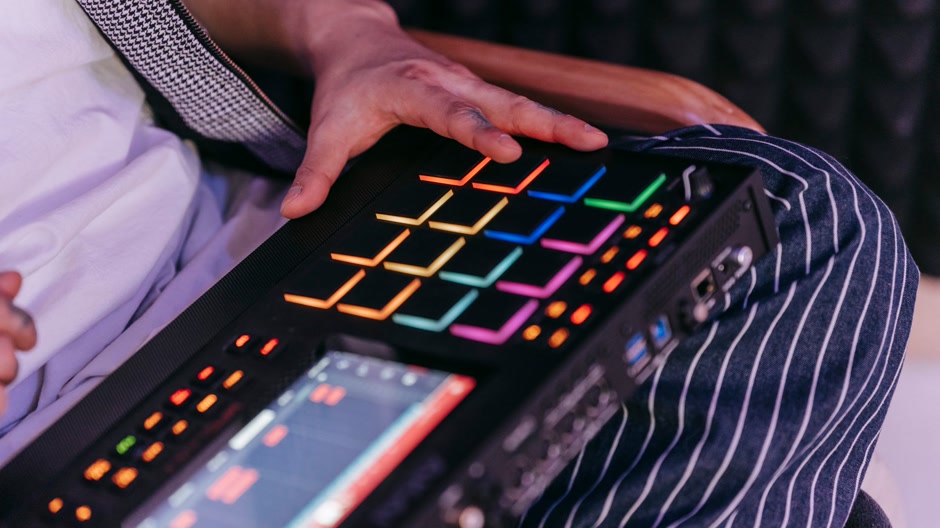
Congas and bongos go where the vocal leaves space: the last beat of the bar, the pickup into the next one, the offbeat of two. Play them on pads if you can, because the timing of a hit that came from a hand is the reason live percussion sounds loose in the right way.
Where the kick and the snare go
The kick is a guide, not the punchline. In the modern sound it usually lands on the first beat and then answers the melody, sometimes skipping the third beat and letting the bass carry that moment. That gap is what makes the groove lean forward instead of stomping.
The snare or rim is sparse: a hit on three, or a pair of soft hits into the next bar. Claps stack under rim clicks for choruses as long as they stay short. Hats sit quieter than in trap, because the shaker already owns the high end, and two bright elements on top of each other turn the mix into hiss.
Tempo sits mostly between about 100 and 112, with plenty of records slower and faster, so treat any number as a starting point rather than a law.
Melody that answers a voice
The melodic part is written like a second vocalist. A two or four bar guitar figure, a kalimba riff, a marimba or a plucked synth plays a phrase and then stops, leaving the middle of the bar empty for the artist. Call and response, not a wall of chords. Keep two or three chords, move them so a singer can follow on the first listen, and keep the melody out of the register the vocal will use.
Do not confuse this with amapiano, which runs on log drums and a deeper house tempo and has its own set of rules.
Building the drums in a DAW
- Start with the shaker, not the kick. Build the pattern you would nod to and the kick will find its place.
- Use two congas at most. One for the answer phrase and one for the accent, tuned apart so they do not mask each other.
- Leave the third beat open. Space where the kick is missing is what makes the low end feel alive.
- Keep the hats dull. High cut near ten or twelve kilohertz so the shaker stays the brightest thing in the mix.
- Print the percussion to a bus. One compressor and one reverb on the group glue the layers into a section instead of five loops.
A good reference for that balance is Melocoton, a dancehall-leaning groove where the percussion does the talking and the kick stays out of the way.

What to check before you download afrobeats beats
Groove first: play the preview and see if the percussion keeps moving once you stop following the melody. Then read the licence, because a free download usually covers non-profit use only and a streaming release needs a lease or an exclusive. Stems matter more here than in most genres, since a mixing engineer will want the shaker and the congas on separate tracks to place them in the stereo field.
Questions that come up about afrobeats type beats
Is an afrobeats type beat the same as an afrobeat instrumental?
In practice, yes. Buyers use both phrases for the modern West African pop sound. Afrobeat with no s at the end technically names Fela Kuti's seventies genre, but shop tags and search results mix the two constantly.
How many drums does an afrobeats beat need?
Four or five elements is plenty: shaker, one or two congas, rim or snare, kick, and a bell if the arrangement calls for it. More layers do not make it more African, they make it harder to mix.
Can you make afrobeats drums with stock samples?
Yes. Any DAW ships with a shaker, a conga and a rim that work once you tune them and program the pattern by hand. The feel comes from timing and accents, not from the pack.
Do afrobeats type beats work for singers or only for rappers?
Both, which is part of the appeal. The sparse bar leaves room for a sung hook, a rap verse or a mix of the two, and that is why the style travels well outside West Africa.
The closest thing in this catalogue is the dancehall instrumentals section, built on the same percussive approach and the same space for a voice. The rest of the beat catalogue covers the neighbouring grooves, from Latin trap to bouncy club beats, if you want to compare pockets side by side.


