
How to Flip a Sample: Chop, Pitch and Rebuild a Loop
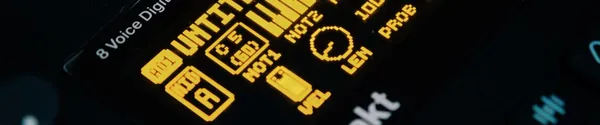
Flipping a sample is the oldest move in hip hop: you take a few seconds of somebody else's record, cut it into pieces and build something the original never did. The technique survived every change in gear because it works, and because a flipped loop carries a texture that no plugin quite reproduces. The gap between a flip that sounds like a record and one that sounds like a sample with drums dropped on top is almost never the record chosen. It is what happens after the chop.
Pick a phrase that leaves space
The phrase has to have room in it: a guitar line with a gap at the end, a piano figure that repeats, a horn stab that rings out, a single sung note held long enough to sit under a verse. Avoid sections that already carry a full drum kit, because then you either keep those drums and fight them, or cut around them and lose the groove you liked.
Two bars is usually enough for a flip and four gives you variation to work with. Play the record from the top and stop at the first four seconds that make you nod, not at the first four seconds that are technically usable. Boring source material stays boring after every trick in this guide.
Chop on the note, not on the grid
Automatic slicing cuts where the software thinks the beat falls, and the software is guessing. Cut at the front of each note by ear, listening for the attack, and let the chop start a hair before it. A slice that lands a few milliseconds late clips the transient, and the transient is the part of the sample that sounds expensive.
- Fade in for two or three milliseconds. Long enough to kill the click, short enough to keep the bite.
- Keep the tail. The room at the end of a chop is what makes the pieces sound like one performance.
- Play the chops on pads. Auditioning by hand finds rhythms you would not draw in a piano roll.
- Leave some chops unused. Six good slices beat sixteen that all get played.
- Stretch as little as possible. A small stretch is invisible, a large one smears the consonants.
Pitch the sample first, tempo second
Speeding a record up raises its pitch, so the two decisions are really one. Transpose the phrase until it sits in a key you can play, then set the project tempo from the length of the loop instead of forcing the loop to a tempo you had in mind. If the source was a record meant for 33 played at 45, half the work is already done and the pitch is part of the character.
Once the loop is in place, tune everything else to it. The bass and the kick have to agree with the sample root, and not approximately: a low end that sits a quarter tone off makes a warm loop sound broken no matter what you do to the drums.
Rebuild the loop instead of repeating it
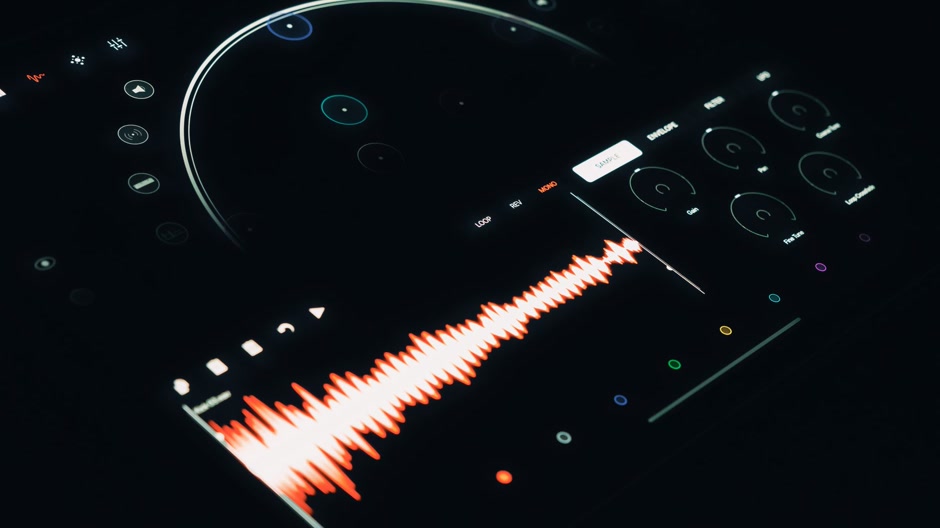
A single bar on loop is a sample. A flip is what happens in the second bar: reorder the chops, drop the last one, play one an octave up for the hook, reverse a slice so it leads into the downbeat. None of those moves needs new material, and all of them make the loop feel written rather than found. Leave a beat of silence before the drop and the drop gets heavier for free.
Add drums that stay out of the way
The sample is the melody here, so the drums are there to mark time. Put the kick where the loop has no low end, put the snare where it lifts the phrase rather than where it is supposed to go, and keep the hats thin. Carve a small dip out of the sample around the bass range, or duck it under the kick with a sidechain, and the low end stops fighting itself.
A clean example of that balance is The Woods, where a dusty loop sits behind drums that never crowd it.

Where the legal line sits
Any sample you can recognise needs clearance before a commercial release, even if you chopped it into something unrecognisable. For a beat sold with a licence, the safe route is a played loop or a sample from a library that grants the rights in writing. A flip of a record you love costs nothing as long as it stays offline and unmonetised. The guide on how to clear a sample covers who to contact and what it costs.
Questions that come up while flipping one
Do you need a sampler to flip a sample?
No. Any DAW with a slice mode does the same job: cut, map the pieces to keys or pads, play them back. Hardware is faster to audition ideas on and it pushes you towards playing instead of drawing, but the result depends on the chops, not the box.
Can you flip a sample without changing its pitch?
Yes, with time stretching, which changes length and leaves the pitch where it was. It is the right choice when the phrase only works in its original key. Keep the stretch under about ten percent, because beyond that the transients soften.
How long should a flipped loop be?
Two bars for the core idea, four bars if the phrase answers itself in the second half. Sparse chops can sit on one bar, but then the second bar has to do the work by subtraction: fewer chops and more silence.
Why does my flip sound worse than the original?
Usually the chop cut the attack, the bass is not in tune with the sample, or the drums are too busy. Fix them in that order. The sample was already finished music, so the job is to frame it, not to compete with it.
To hear that approach finished, the sampled instrumentals in the catalogue are built this way, and the boom bap instrumentals take it further towards drums and space. The rest of the beat catalogue covers the same ground with played loops when a sample is not an option.


